

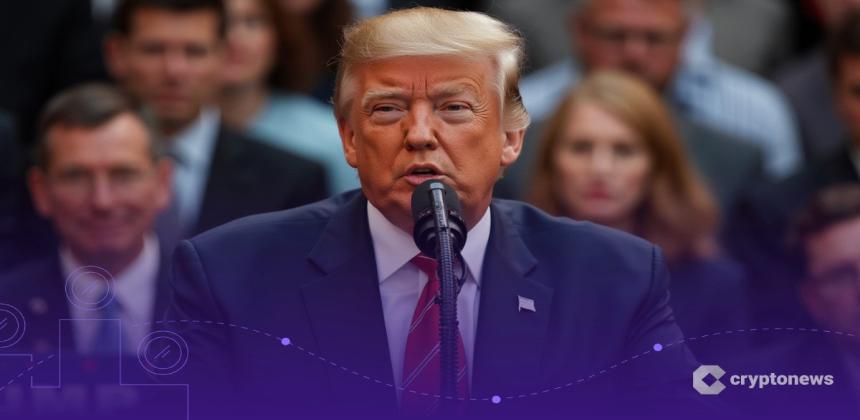
Washington — President Donald J. Trump on Friday signed the GENIUS Act, a landmark bill creating the first major U.S. regulatory framework for cryptocurrency. Calling digital assets an “exciting new frontier,” the president celebrated the legislation one day after it cleared the House with bipartisan support.
The GENIUS Act—short for Guiding and Establishing National Innovation for U.S. Stablecoins—establishes consumer protections and legal standards for the fast-growing $250 billion stablecoin market. Stablecoins are digital currencies tied to assets like the U.S. dollar, designed to reduce volatility compared to other cryptocurrencies.
With the law now in place, banks, credit unions, and nonbank financial institutions will be able to issue stablecoins backed one-to-one by U.S. dollars and Treasury bills. Supporters argue the framework could strengthen the dollar while enabling faster, lower-cost payments for businesses and consumers.
“This could be, perhaps, the greatest revolution in financial technology since the birth of the Internet,” Trump said during the signing ceremony in the White House East Room, joined by lawmakers and executives from major crypto firms including Robinhood, Tether, and Gemini.
The bill’s passage followed tense negotiations earlier in the week when a group of conservative Republicans blocked a procedural vote. According to Trump, he personally called several holdouts to secure their support. “They just want a little love,” he joked.
Alongside the GENIUS Act, Congress approved two additional pieces of legislation:
The Clarity Act – establishes regulatory oversight for digital commodities beyond stablecoins.
The Anti-CBDC Surveillance State Act – blocks the Federal Reserve from directly issuing a retail central bank digital currency to Americans.
Together, the three measures—dubbed “Crypto Week” by Republicans—represent a significant step toward integrating digital assets into the U.S. financial system.
Venture capitalist David Sacks, now serving as President Trump’s AI and crypto czar, credited Trump with “stepping in and saving this bill.” Vice President JD Vance was also praised for helping secure late-night negotiations that pushed the legislation across the finish line.
Framing the moment as a turning point for the crypto industry, Trump declared:
“The entire crypto community—you were mocked, you were counted out. But this signing is a massive validation.
While critics have questioned the Trump family’s financial ties to digital assets, the White House has insisted the president’s holdings are managed in a trust overseen by his children.
The signing of the GENIUS Act capped a dramatic week on Capitol Hill, underscoring Trump’s broader push to integrate cryptocurrency into the U.S. economy and reinforce the nation’s role as a global financial leader.